Mediterranea
Kunsthalle Darmstadt 31.1.2026 - 15.3.2026
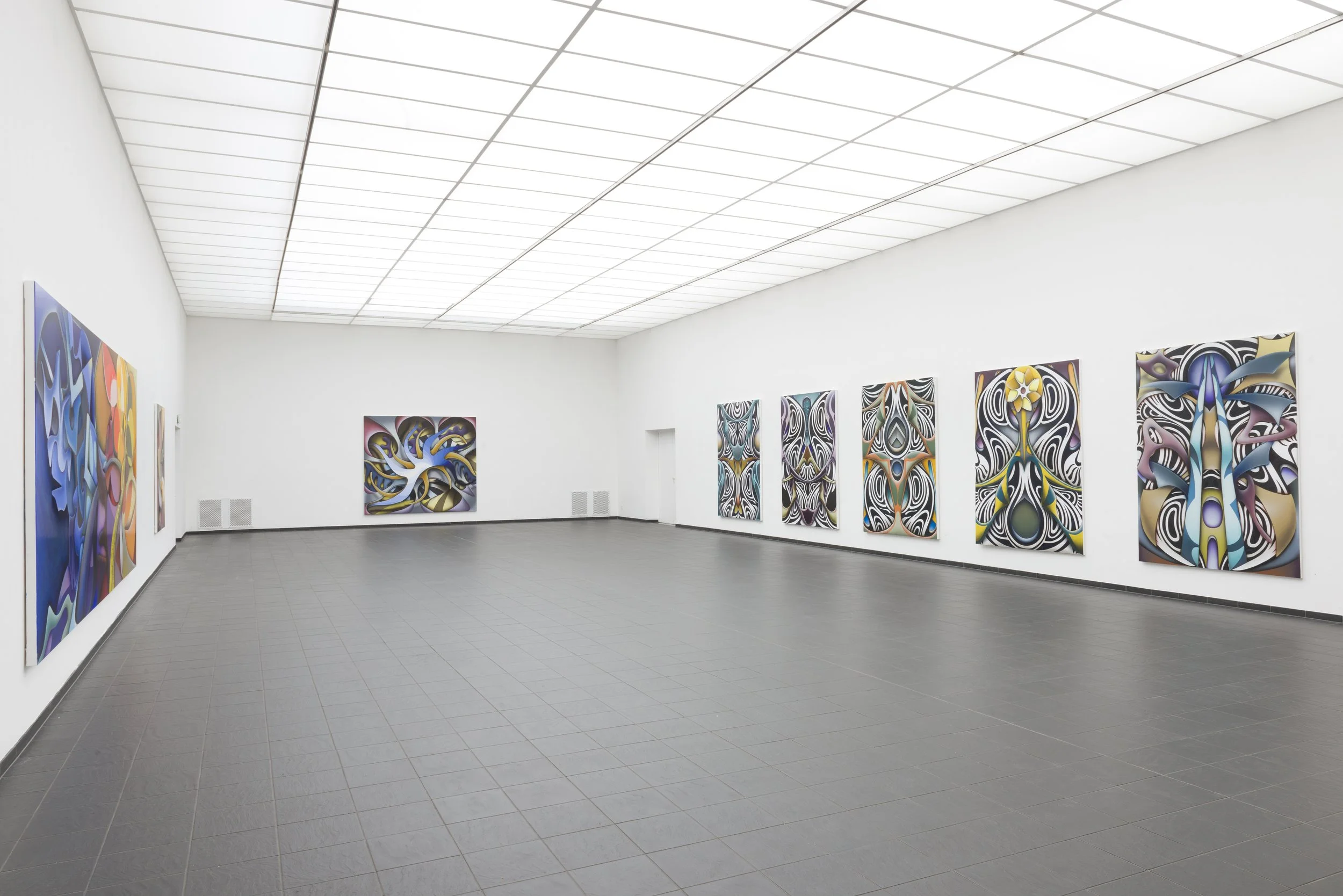
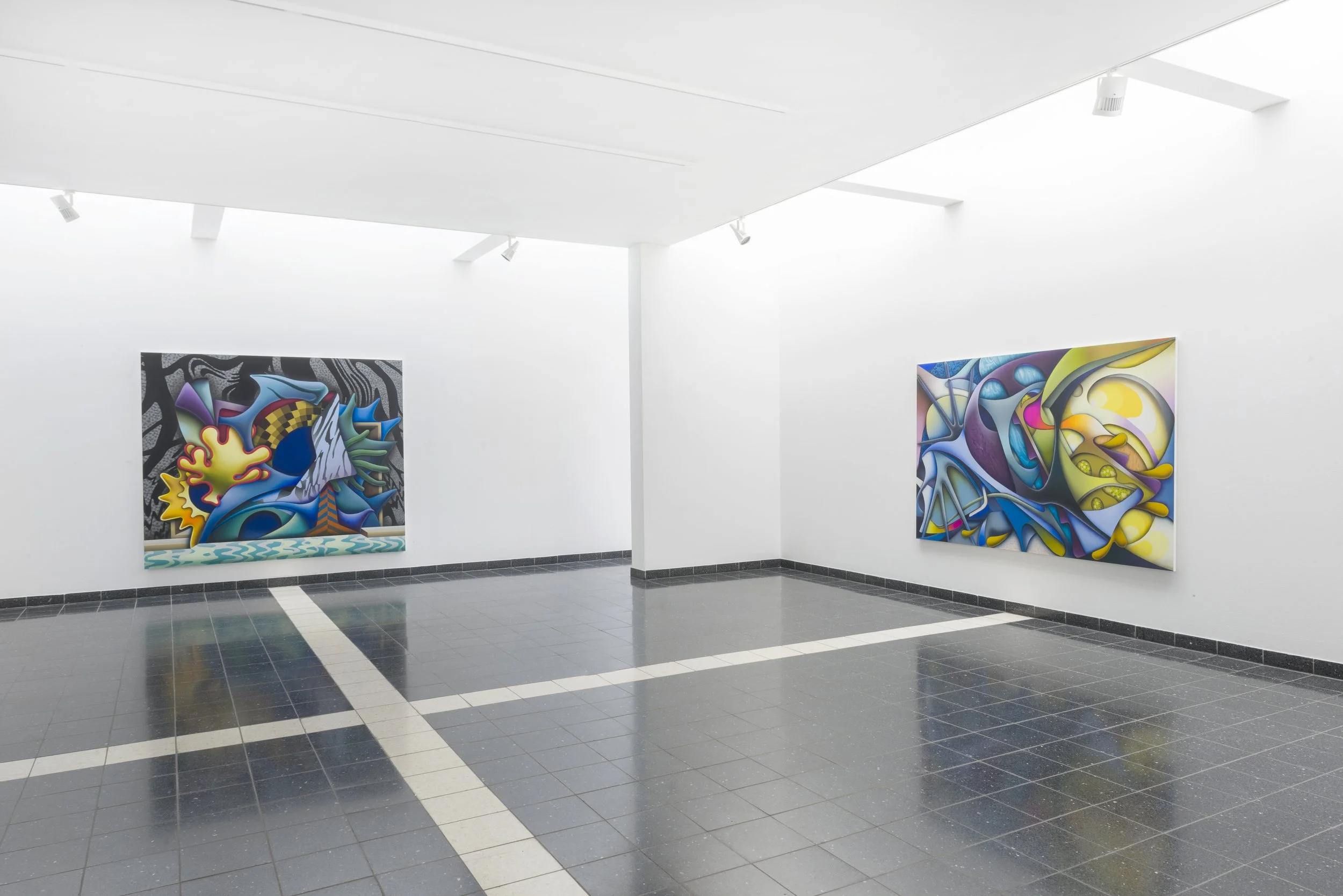
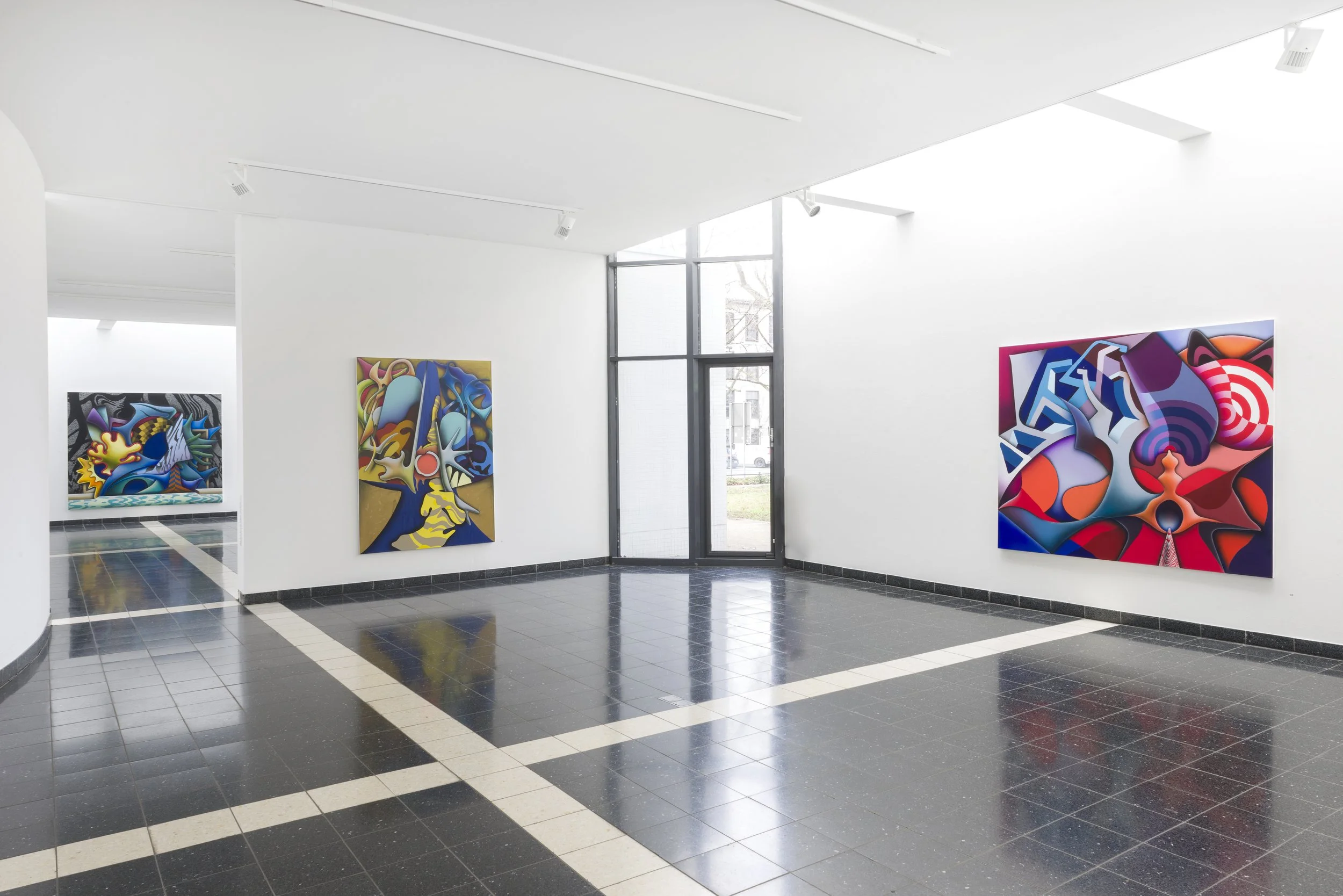
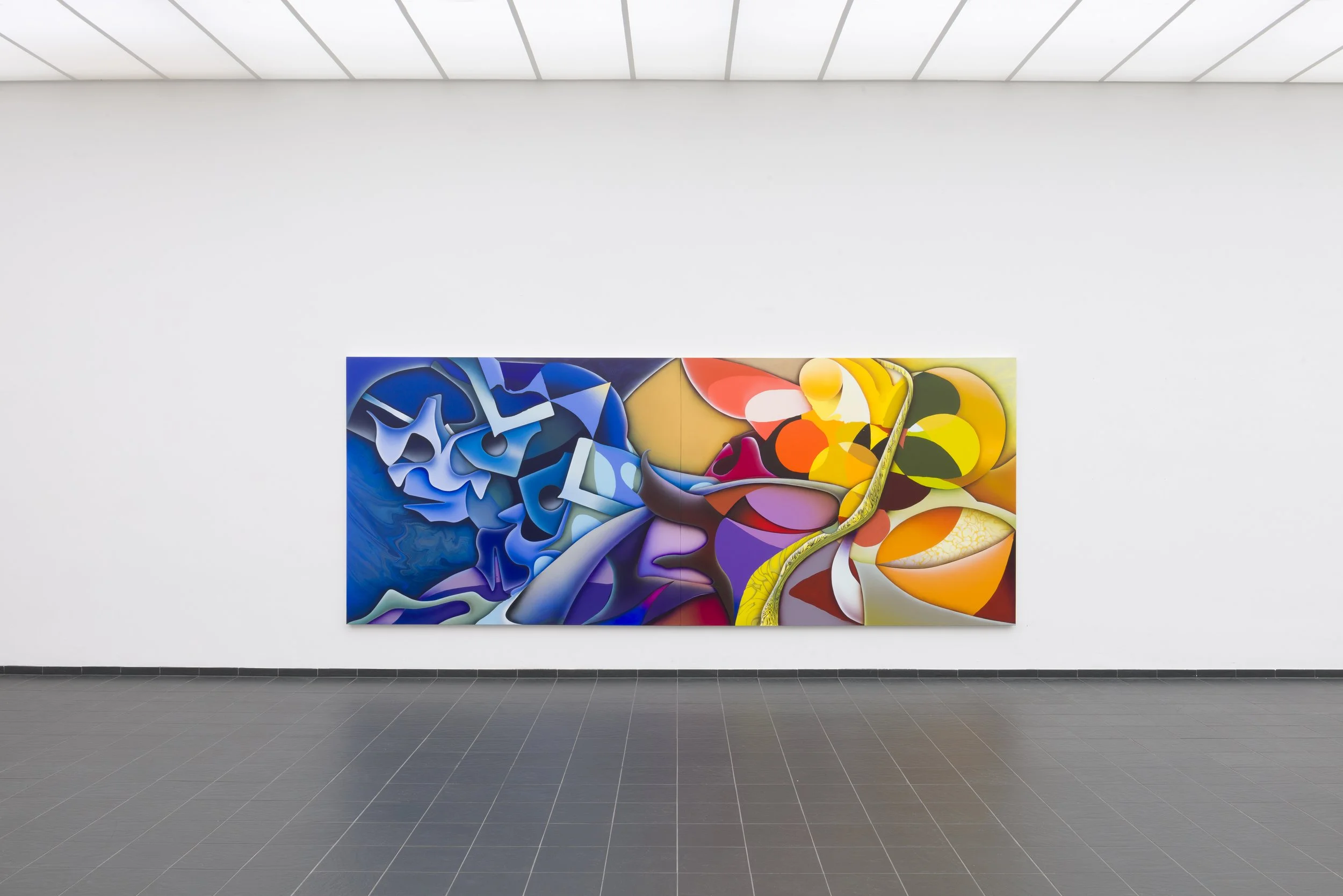
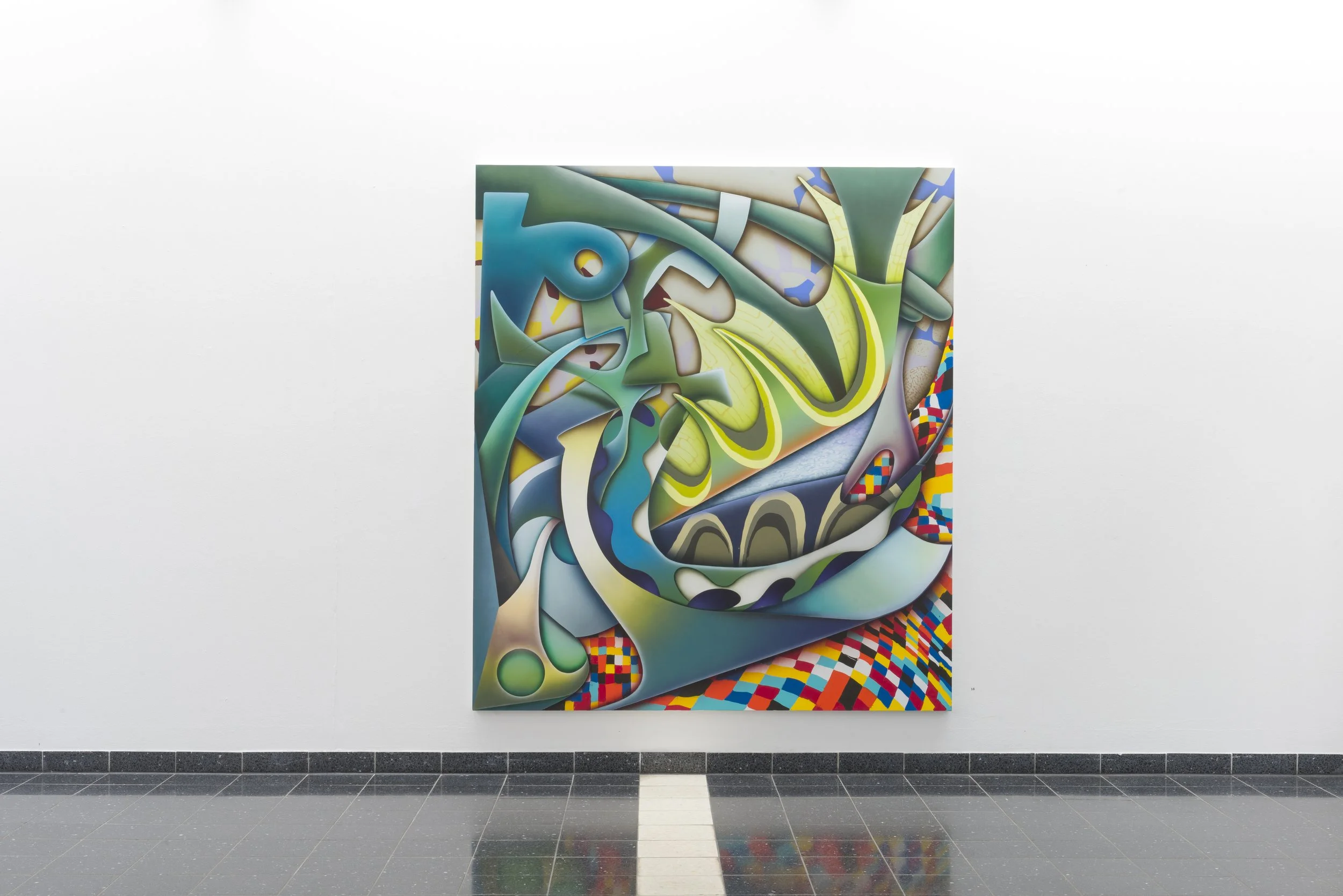
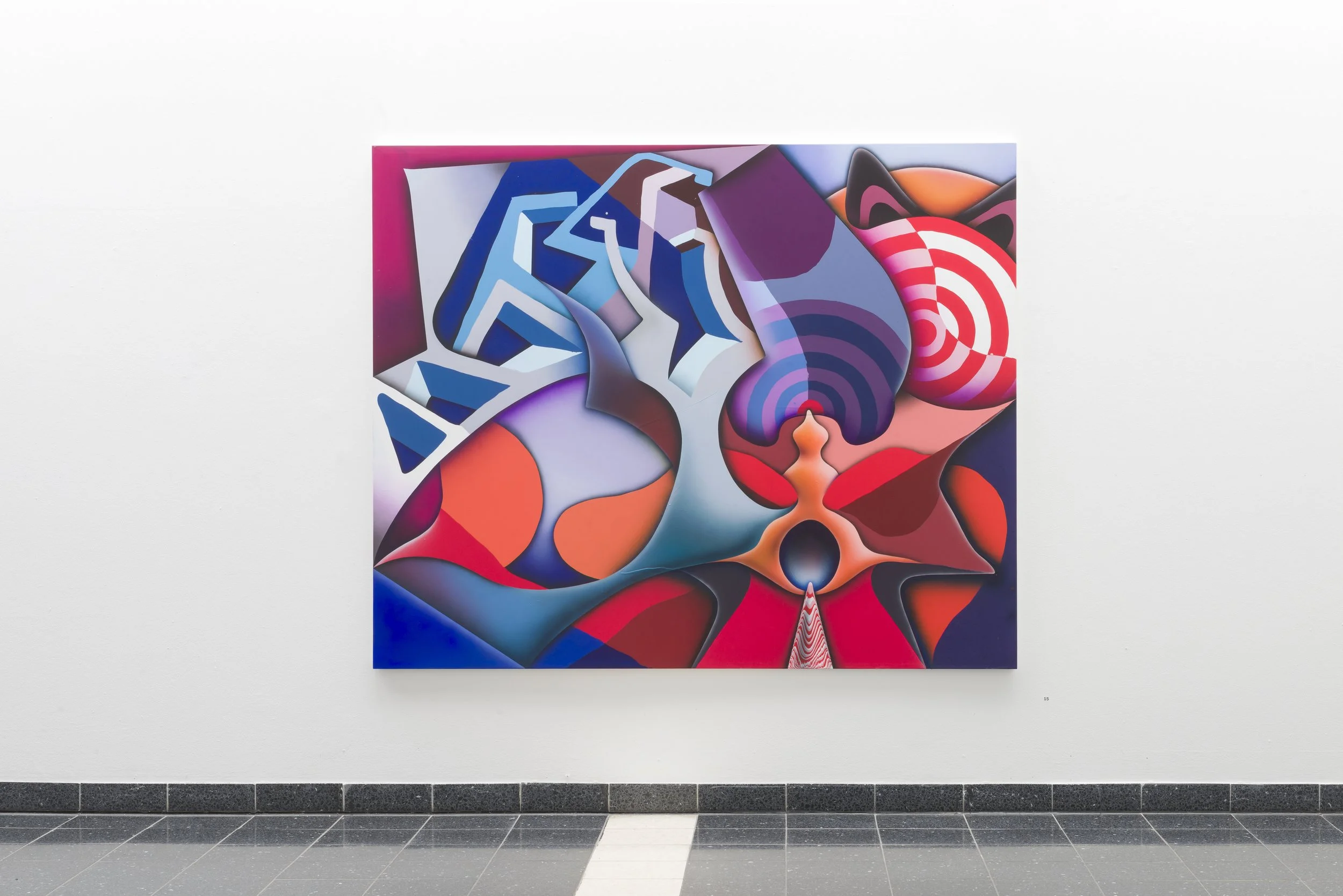
Installaion view of the artist Harm Gerdes first institutional exhibition at Kunsthalle Darmstadt, Germany. It shows the main hall of the exhibition, a daylight room with panels that provide bright, even lighting.
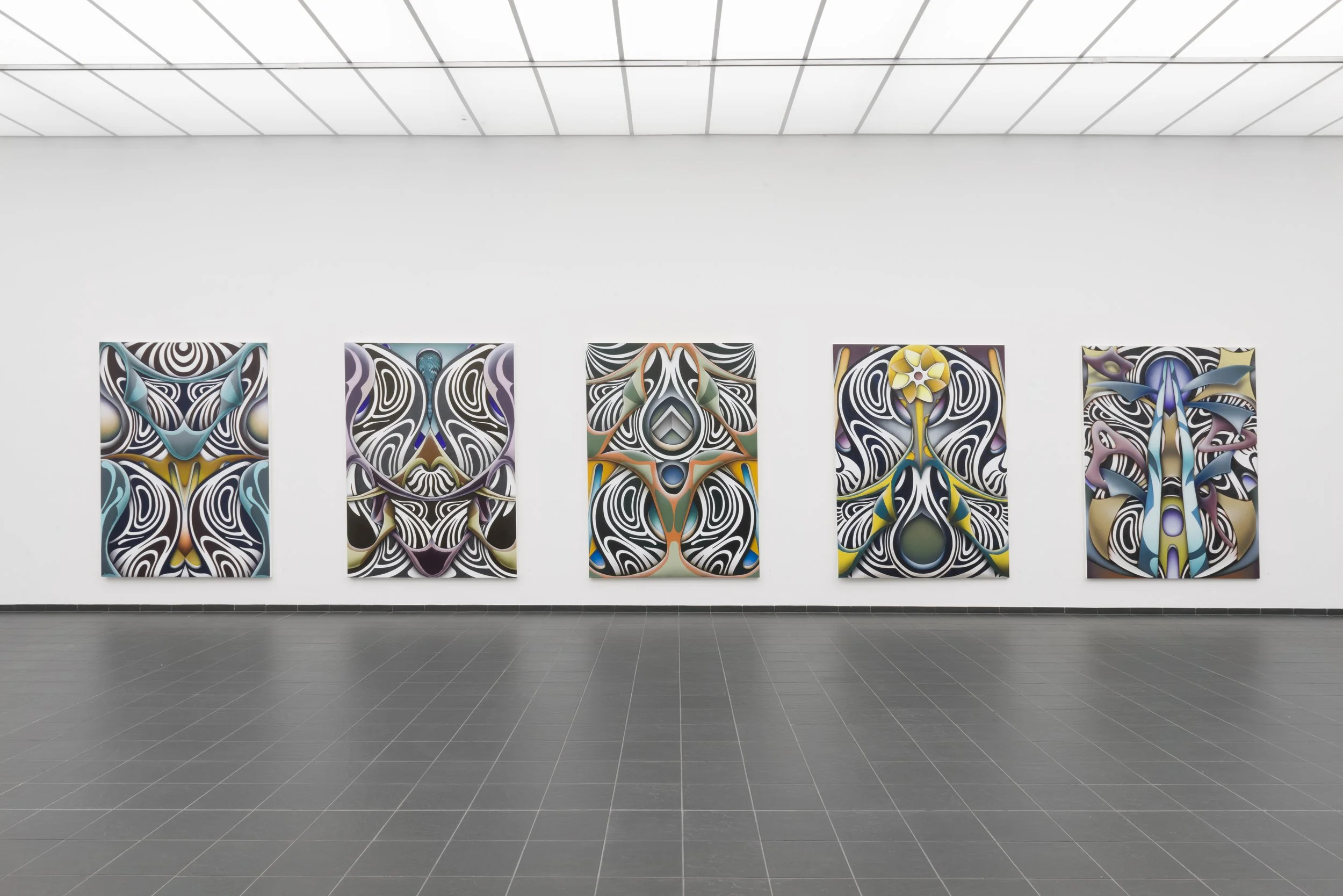
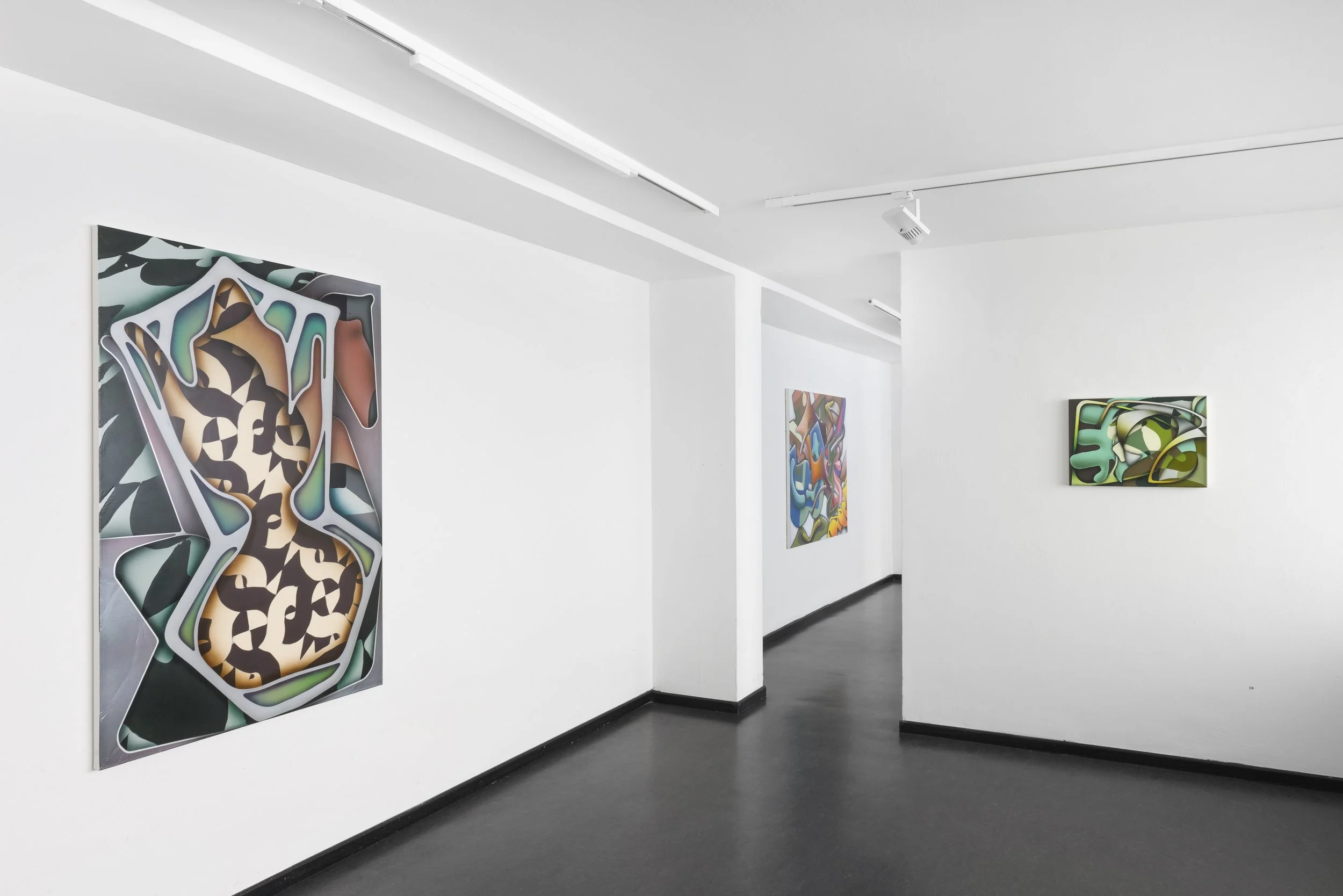
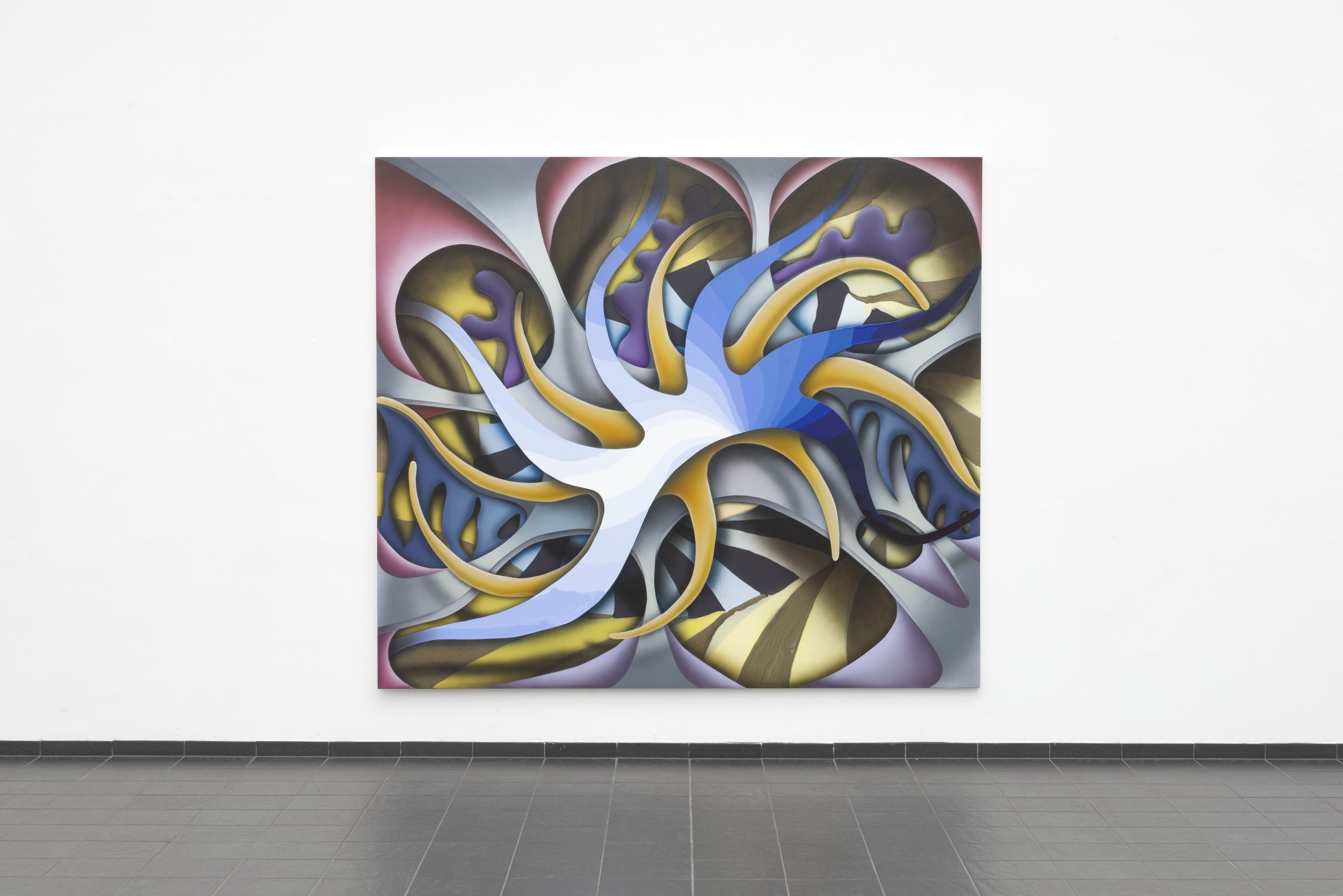
Installaion view of the artist Harm Gerdes first institutional exhibition at Kunsthalle Darmstadt, Germany. A row of five abstract, colorful paintings with black and white swirling patterns on a white gallery wall. They study a art nouveau pattern.
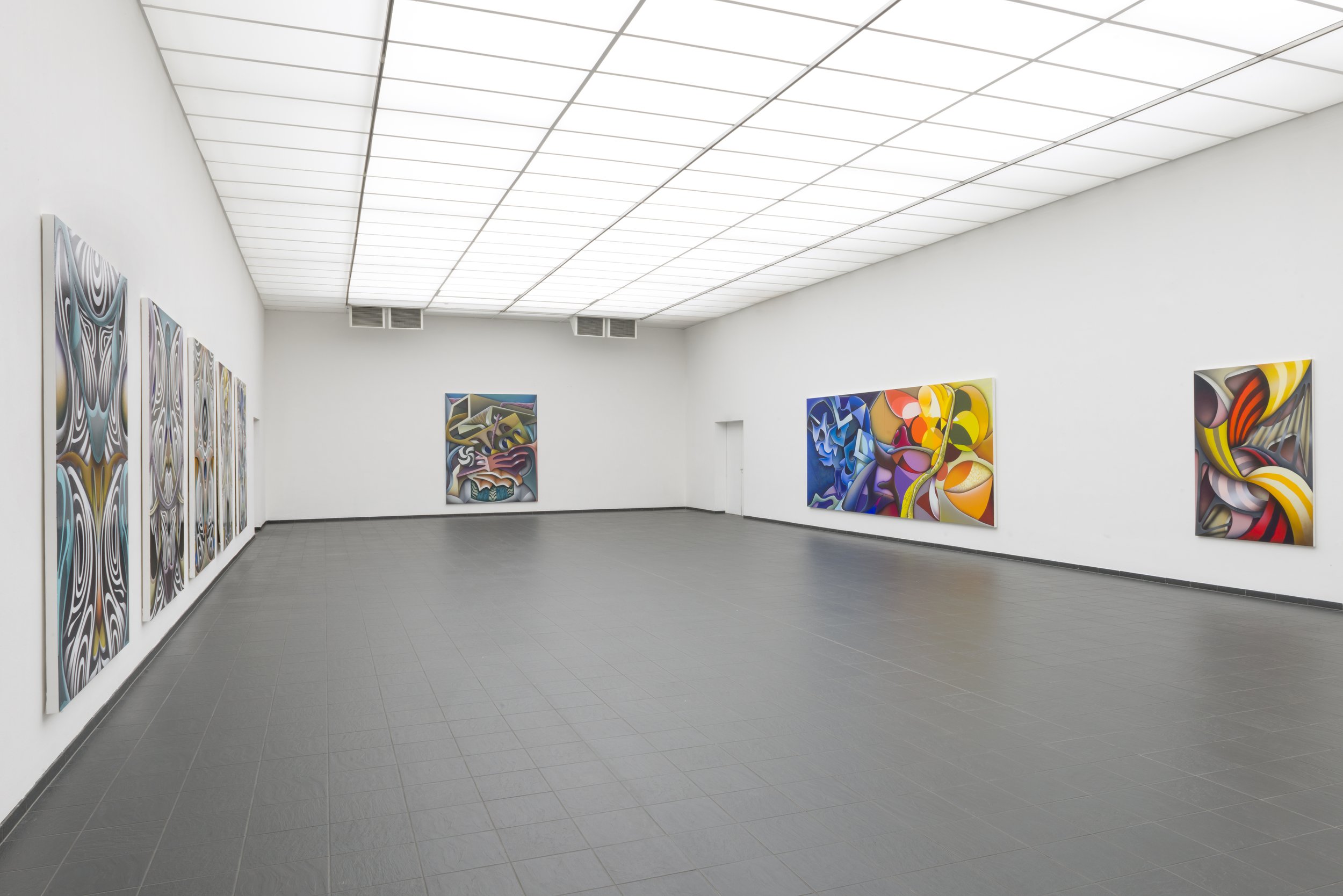
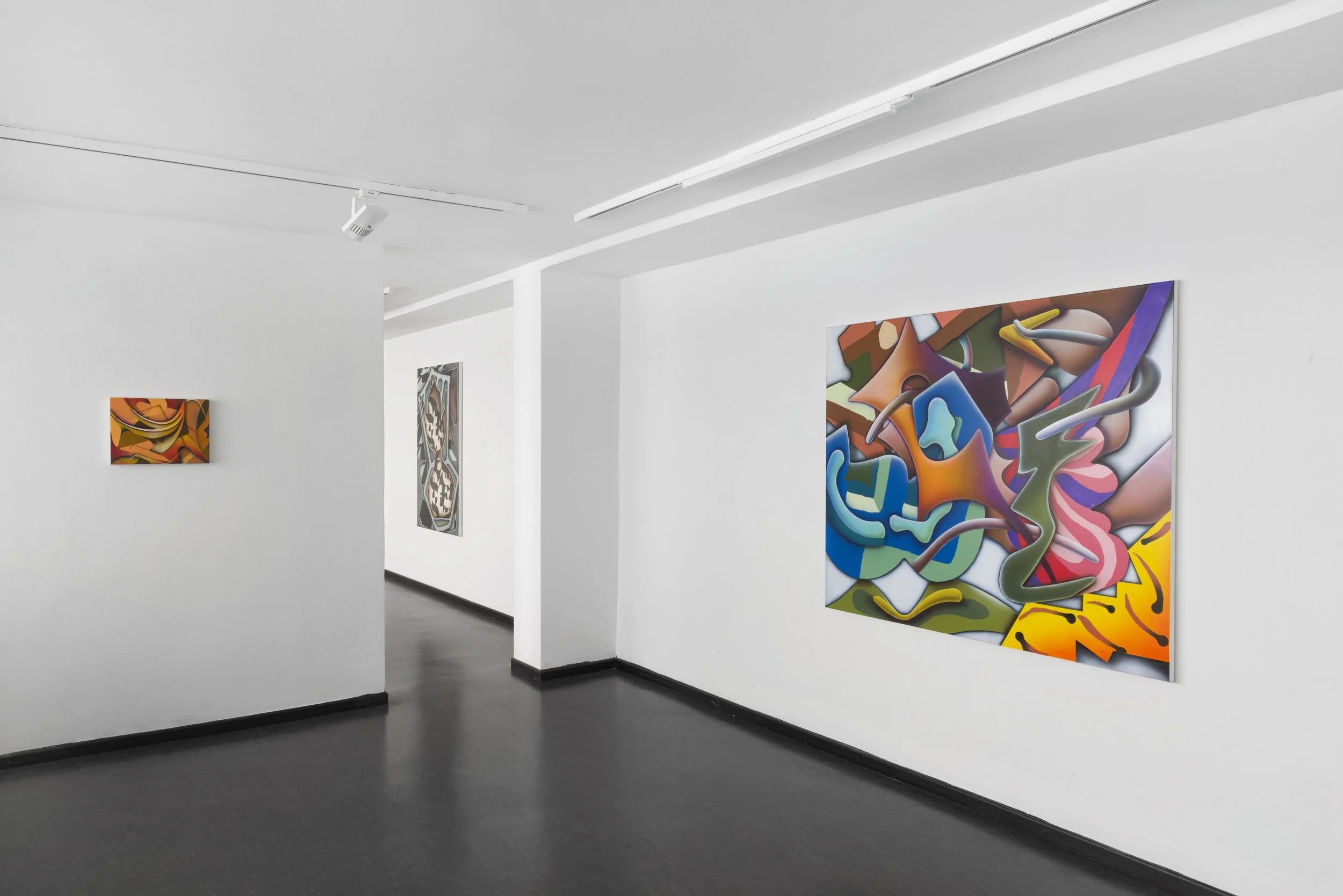
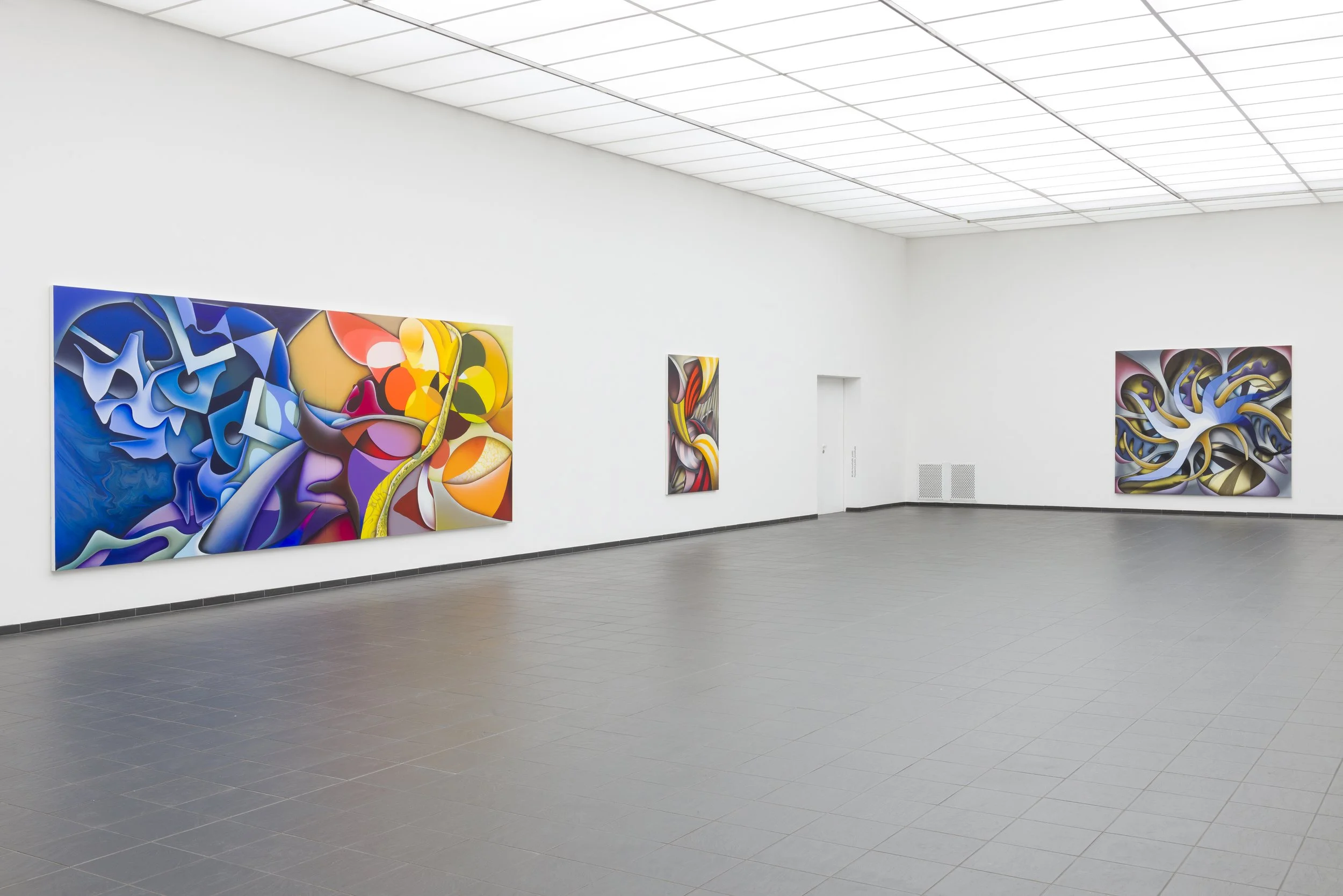
Installaion view of the artist Harm Gerdes first institutional exhibition at Kunsthalle Darmstadt, Germany. Art museum gallery with colorful abstract paintings on white walls under a grid ceiling with bright lighting.
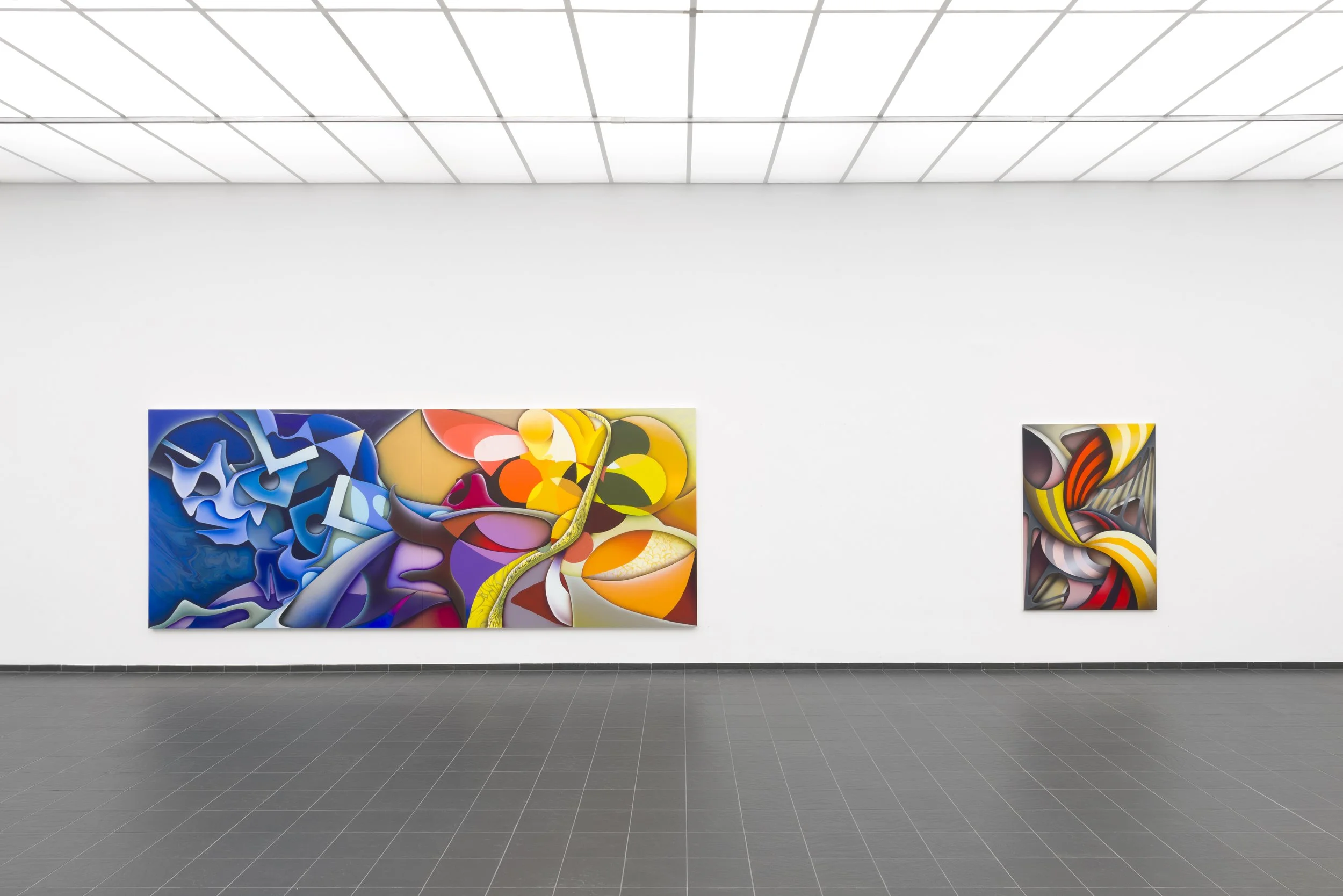
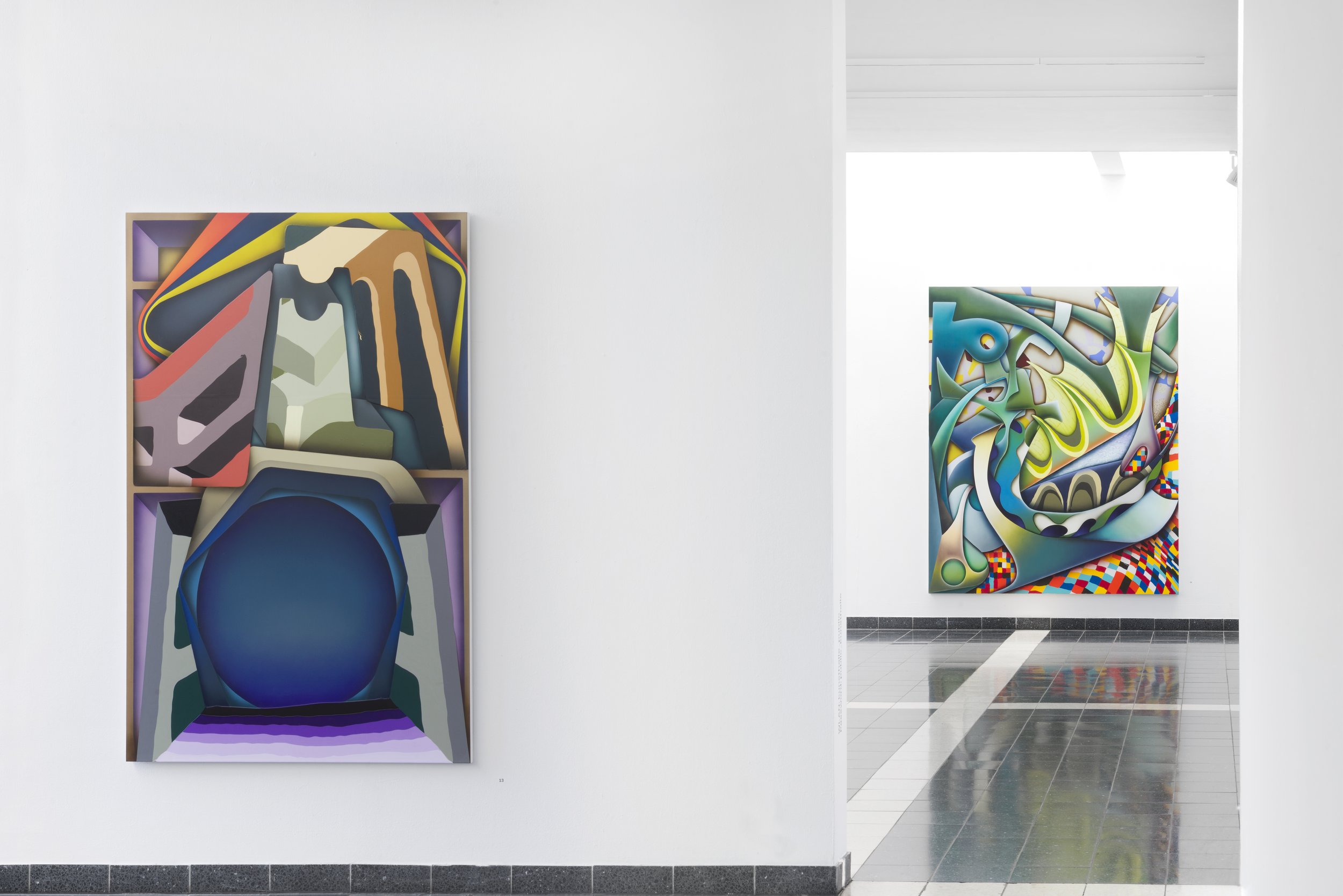
Two colorful abstract paintings with curving shapes hang on a white gallery wall. Installaion view of the artist Harm Gerdes first institutional exhibition at Kunsthalle Darmstadt, Germany.
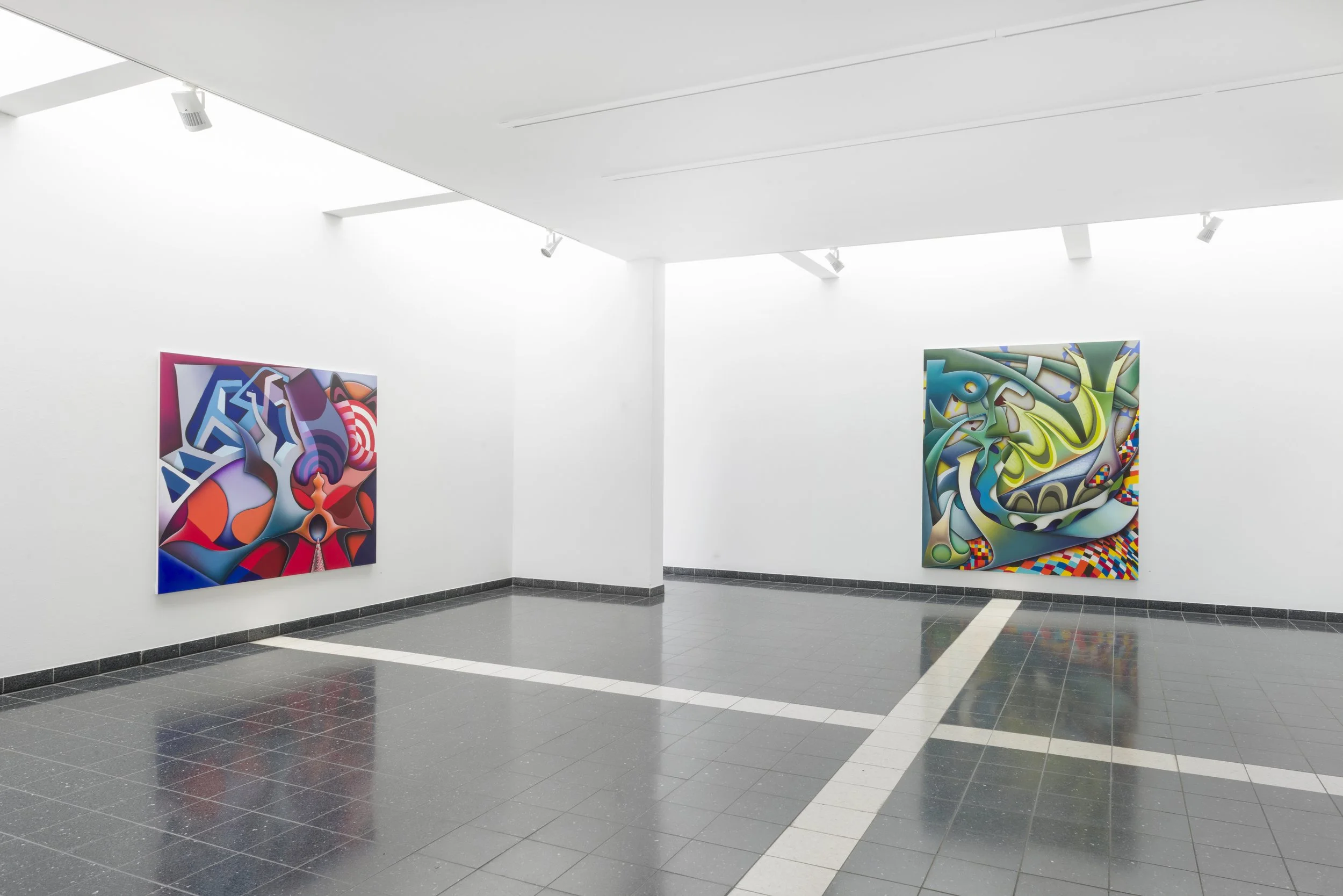
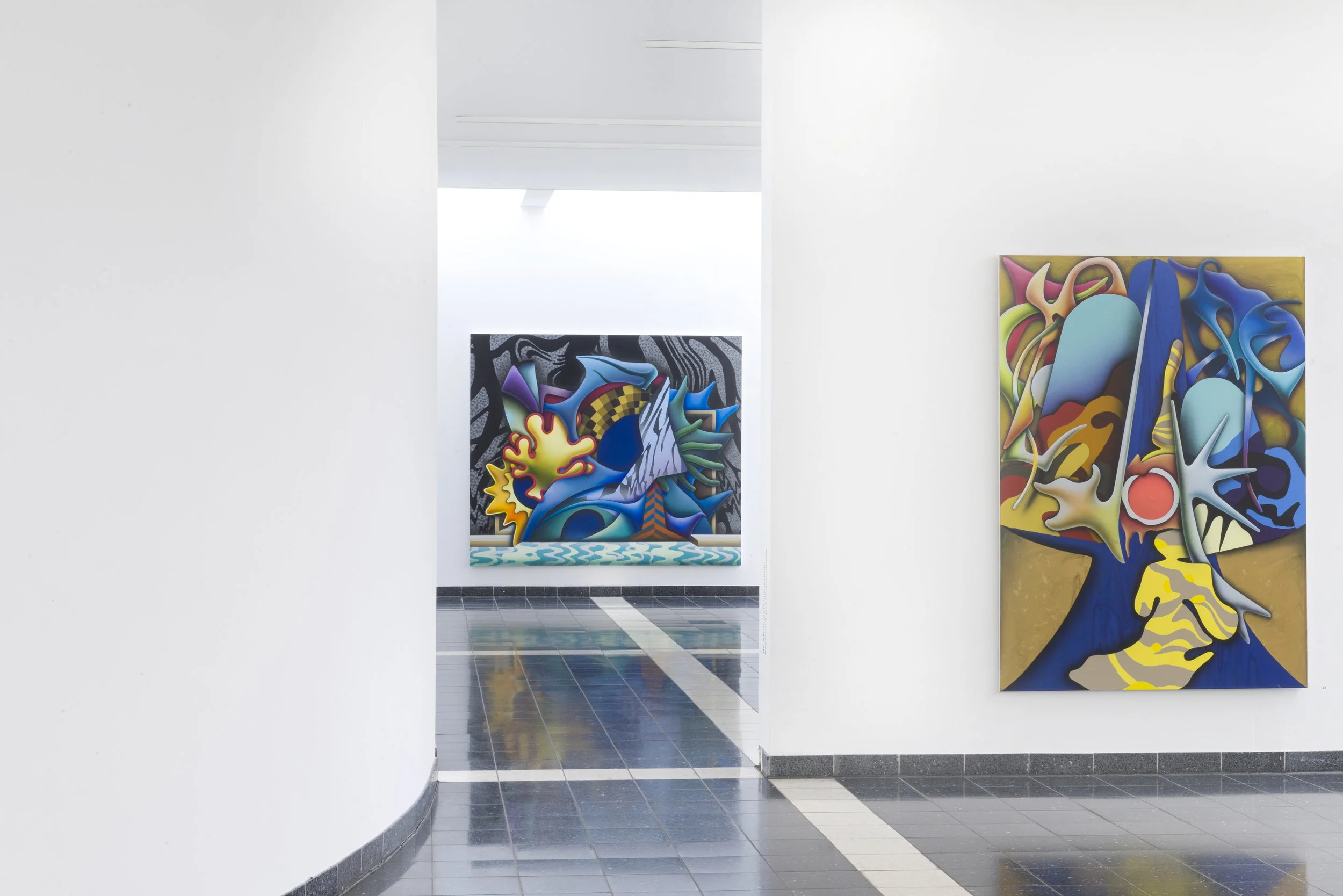
Installaion view of the artist Harm Gerdes first institutional exhibition at Kunsthalle Darmstadt, Germany. Art gallery with two colorful abstract paintings on white walls and a tiled black and white floor.
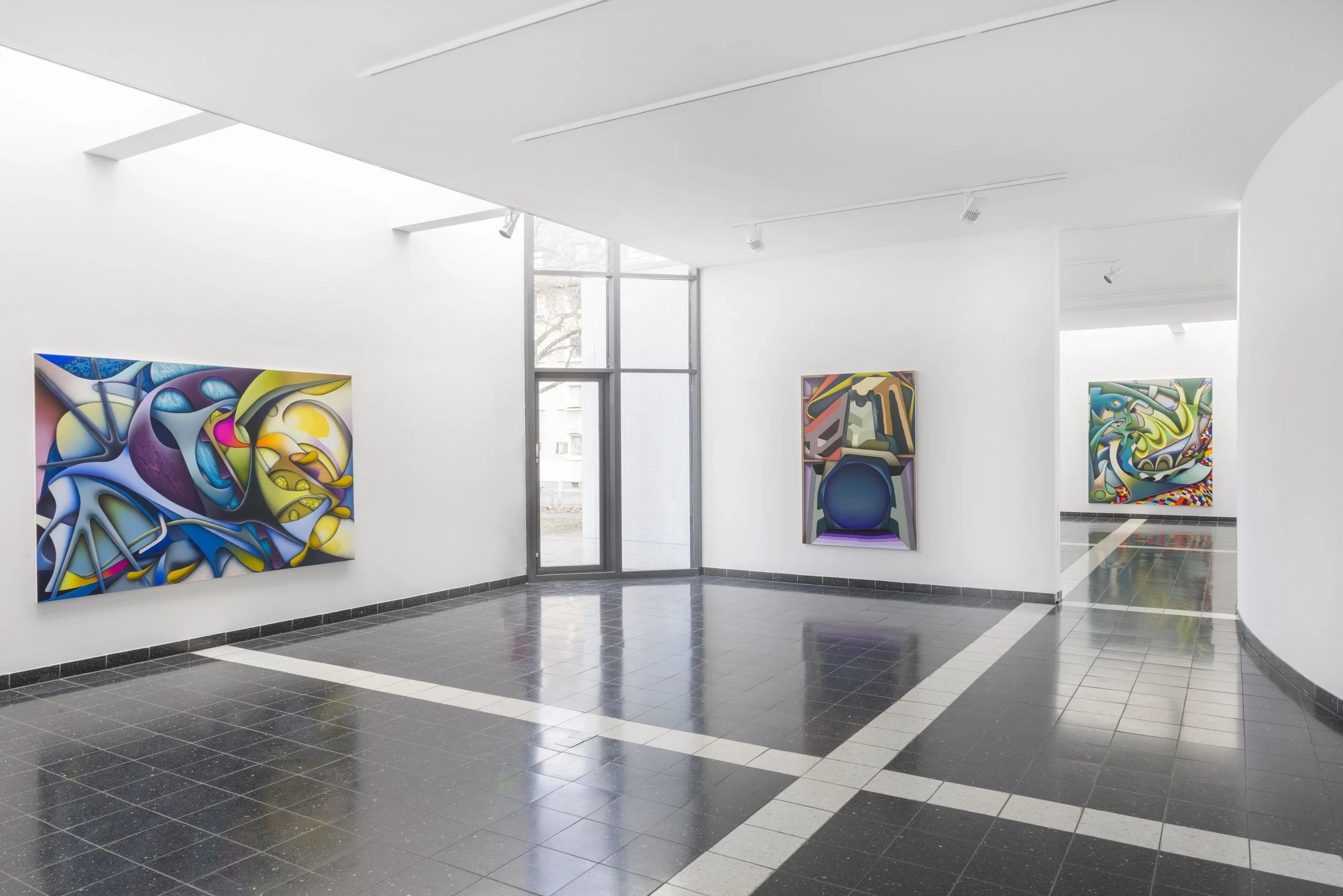
Installaion view of the artist Harm Gerdes first institutional exhibition at Kunsthalle Darmstadt, Germany. An art gallery with white walls and black tile flooring, displaying colorful abstract paintings. Large windows let in natural light.
Installaion view of the artist Harm Gerdes first institutional exhibition at Kunsthalle Darmstadt, Germany. Two abstract colorful paintings hanging on white walls in an art gallery, with a tiled reflective floor.
Installation view of the artist Harm Gerdes first institutional exhibition at Kunsthalle Darmstadt, Germany.
Installation view of the artist Harm Gerdes first institutional exhibition at Kunsthalle Darmstadt, Germany. An art gallery with white walls displaying colorful abstract paintings, and black and white tiled flooring with a patterned border.
Installation view of the artist Harm Gerdes first institutional exhibition at Kunsthalle Darmstadt, Germany. Art gallery walls displaying colorful abstract paintings with organic shapes, in a bright, modern space with black and white tiled flooring.
Installation view of the artist Harm Gerdes first institutional exhibition at Kunsthalle Darmstadt, Germany. Interior of an museum with white walls and black flooring, displaying colorful abstract paintings.
Installation view of the artist Harm Gerdes first institutional exhibition at Kunsthalle Darmstadt, Germany. Art gallery with colorful abstract paintings on white walls and black flooring.
Installation view of the artist Harm Gerdes first institutional exhibition at Kunsthalle Darmstadt, Germany. Colorful abstract painting with shapes and patterns, displayed on a white gallery wall in an art gallery.
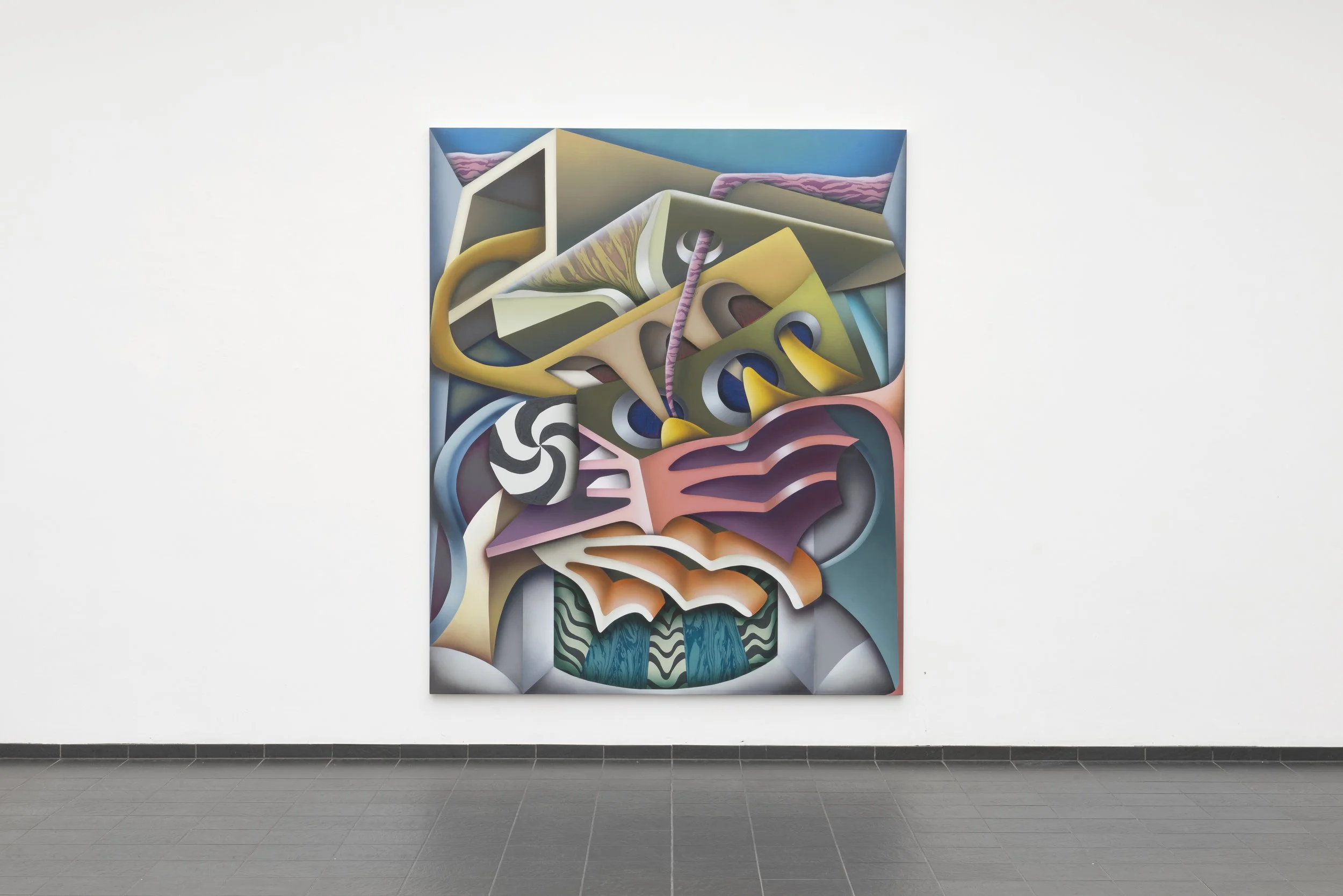
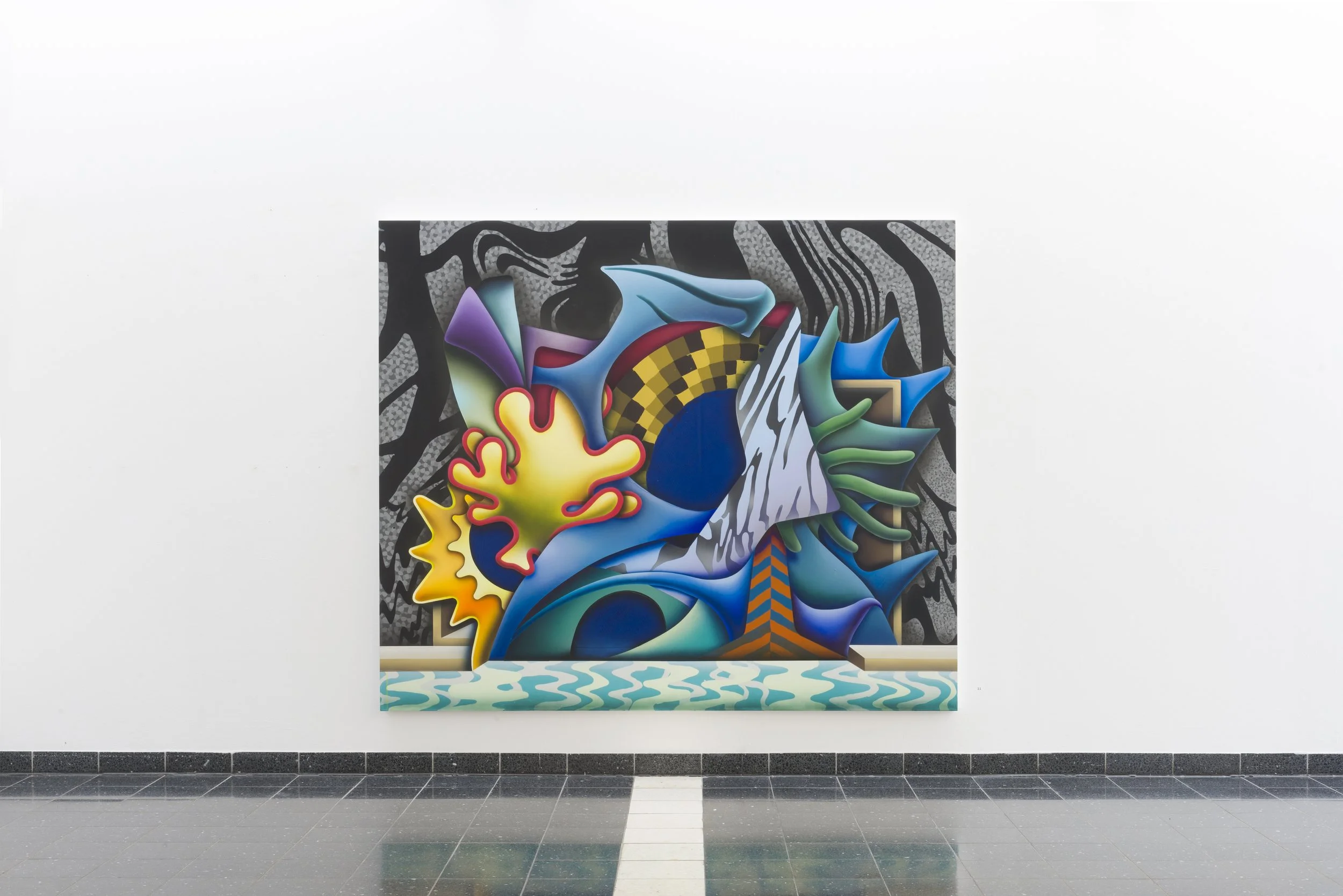
The Kunsthalle Darmstadt is hosting the largest solo exhibition to date by Cypriot-German artist Harm Gerdes. Entitled Mediterranea, it brings together around 20 large canvas paintings, most of which were created in Athens over the last five years. Many of the paintings on display have never been shown before; Gerdes produced a series of five works especially for the exhibition, based on an Art Nouveau pattern from the Mathildenhöhe in Darmstadt.
Raised in Darmstadt, Harm Gerdes (31) studied, amongst others, under Katharina Grosse at the Düsseldorf Art Academy. He has been living and working in Athens for several years and regularly exhibits internationally. Gerdes developed and perfected a technique of pouring acrylic instead of applying oil with a brush. This innovation contributes significantly to the powerful, elegant effect of his paintings, which display color and form in a way that has not been seen in a long time.
"Harm Gerdes is inventing a new language. (...) It is closely connected with our present era, with the world of screens, with the radical transformation of the visual faculty that is presently occurring, whereby it must be observed that such an approach to painting—and this is its strength—at no time takes up the semiotic language of our screen. world but instead finds equivalents for it (...)" (Robert Fleck, quoted from the exhibition catalog)